Beijing Zhajiangmian: Noodles, Fried Sauce and Vegetable Accompaniments
Zhajiangmian makes more sense as three interacting parts than as noodles covered with a generic brown sauce. The noodles carry the meal, the fried bean-based sauce supplies concentrated seasoning and the vegetable accompaniments change texture and balance. Each part deserves attention when ordering and mixing.
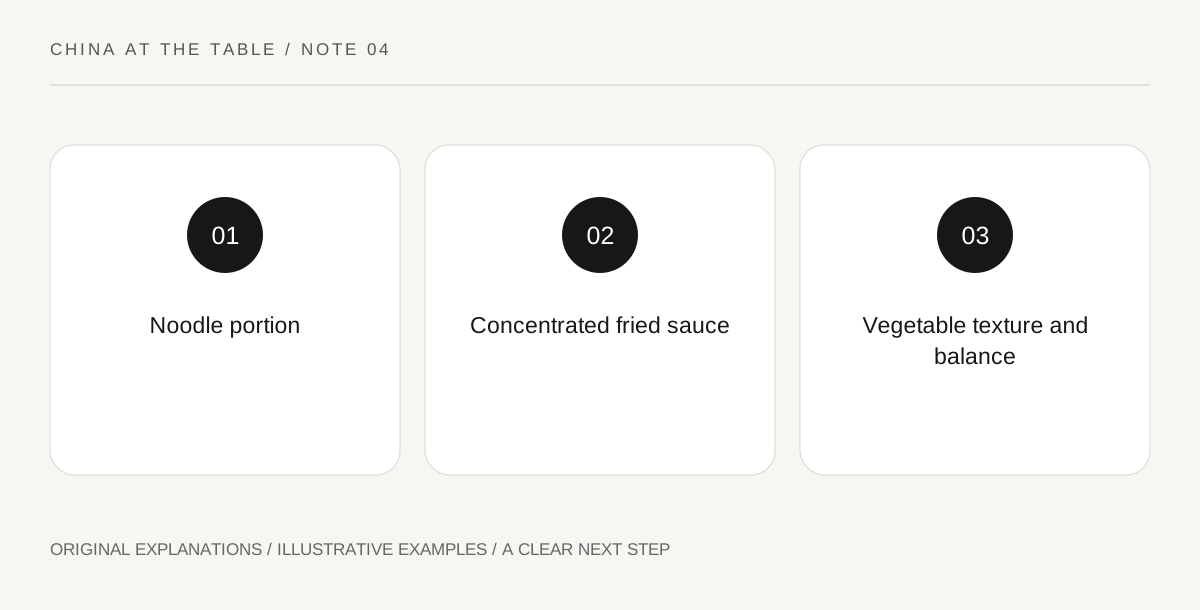
Original explanatory diagram. Read the full method and limitations below.
Recognize the three-part arrangement
Beijing tourism’s account explicitly organizes the dish around noodles, sauce and accompaniments. That is a useful reading method when components arrive separately or in distinct areas of a bowl. Identify which is the main noodle portion, which is the concentrated sauce and which vegetables are offered alongside. Do not assume a small sauce bowl is a soup to drink or that every garnish is merely decoration. If the presentation is unfamiliar, ask staff how that establishment serves it. The answer can explain what should be mixed together and what is intended as a separate accompaniment.
Read bean sauce and meat as separate information
The official description includes bean-based pastes and diced meat in documented Beijing preparations. The word bean does not make the finished sauce a vegetarian item. Ask which sauce and meat the kitchen uses, especially if a translation says only soybean noodles. The strength and richness of the sauce also explain why it need not be distributed as though it were a large-volume soup. Begin with the amount served and mix thoughtfully before asking for more. A different restaurant’s color or consistency does not establish that the underlying ingredients are identical.
Use the vegetables to compare texture
The accompaniments may include sliced or prepared vegetables, with selection varying by season and kitchen. Notice how a crisp element changes a mouthful of noodles and sauce, rather than treating the whole assortment as a fixed ceremonial list. Add components gradually if you want to understand their effect. Keep any dietary question attached to the actual vegetable preparation, since being a vegetable does not establish everything about seasoning. If the restaurant provides a separate pickle, ask how it is normally used. You can learn the local practice without feeling obliged to adopt the strongest version immediately.
Do not confuse temperature with an entirely different dish
Beijing’s account describes seasonal serving differences, including noodles rinsed after cooking in some preparations. That provides context for a bowl that does not arrive as a steaming soup. Read what the menu offers and ask whether the noodle preparation is hot, warm or cool if you have a preference. Avoid assuming that every cool noodle dish is liangpi or that all dishes translated as cold noodles share an ingredient base. The decisive questions remain the noodle material, the sauce and the accompaniment. A clear description of those three elements travels better than a vague memory of brown noodles.
Illustrative first bowl
A diner receives wheat noodles, a small bowl of fried sauce and a vegetable assortment. The diner confirms the sauce contains meat, mixes enough to coat a portion and adds two vegetables to compare their effect. The note records noodles, sauce and accompaniments separately. It becomes a useful reference for another version without asserting that one kitchen defines the entire dish.
Practical checks
Optional checkboxes save only in this browser.
Questions that come up
Does soybean sauce mean a meat-free sauce?
No. Documented Beijing versions include diced meat cooked with bean-based paste. Ask the kitchen about the complete sauce and preparation rather than treating the ingredient named in English as the full recipe.
Are cool noodles always made from rice?
No. Temperature does not establish the noodle material. Zhajiangmian is associated with wheat noodles, while other regional cool dishes can use different bases. Confirm the exact item on the menu.
References and scope
These sources support the factual background. Examples and exercises are original illustrative teaching material. References do not imply endorsement.
- Beijing tourism: old Beijing food — Zhajiangmian noodles, fried sauce and vegetable accompaniments.