Lanzhou Beef Noodles: Read Broth, Radish and Noodle Form
Lanzhou beef noodles are often recognized by a clear broth, sliced beef, radish and handmade noodles. That combination gives a diner several useful things to notice beyond whether the bowl is spicy. Read the noodle choice and additions before comparing it with another regional beef-noodle soup.
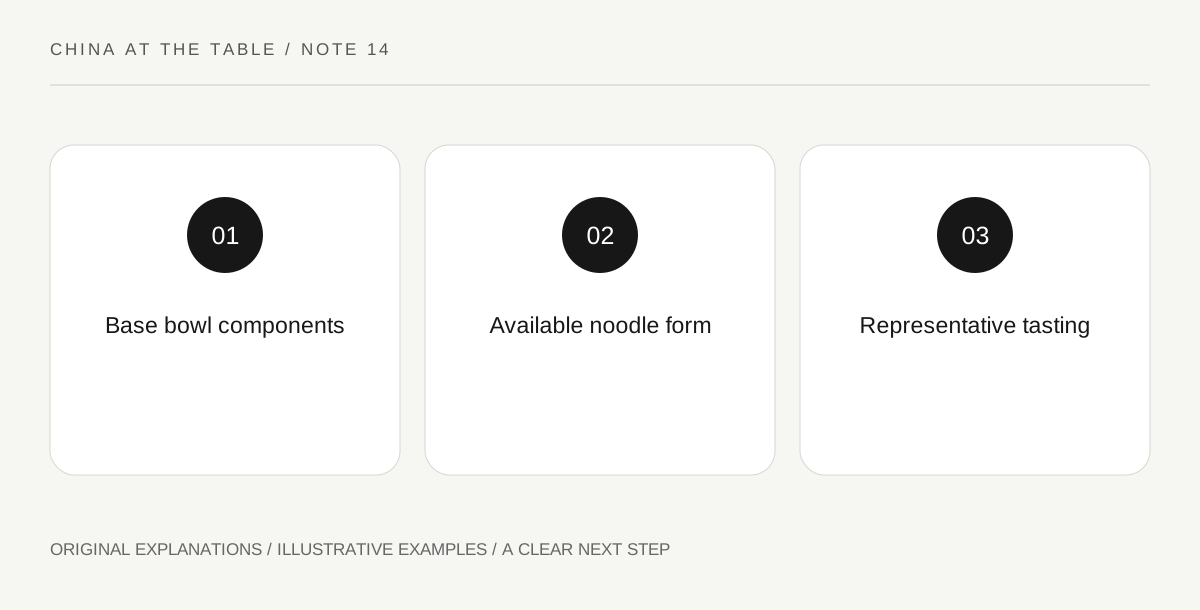
Original explanatory diagram. Read the full method and limitations below.
Start with the documented bowl structure
The SCIO account of the Lanzhou industry briefing describes clear broth, beef, radish slices and handmade noodles. Those elements make a useful identification framework. Look for the broth as well as what sits above it, and distinguish the base bowl from any extra beef or side order sold separately. A menu photograph showing a large meat portion may illustrate an upgraded version. Ask what the displayed price includes. This keeps a first impression from being driven by a mistaken expectation about quantity rather than by the noodle dish actually ordered.
Choose a noodle form the shop actually offers
If the establishment presents several shapes or widths, ask staff to connect the menu terms with examples. A diagram, displayed sample or clear explanation can be more useful than trying to pronounce an unfamiliar name without knowing what it buys. Notice how the chosen form changes the bite and the amount of broth in a mouthful. Do not assume every shop in every city offers the same range or uses the same labels. The lesson is to read the available choice deliberately, not to memorize a universal numbering system from someone else’s photograph.
Keep broth clarity separate from dietary assumptions
Clear appearance describes what you see; it does not mean that a liquid lacks meat, fat, seasoning or other ingredients. Ask about the broth if its composition affects your choice. Similarly, a small amount of visible beef does not establish the full animal ingredient contribution to the bowl. If chili or herbs can be adjusted, make the request before service and confirm what the restaurant can offer. Record the bowl as ordered so a later comparison does not confuse your deliberately modified version with the establishment’s normal presentation. Specific notes are more useful than claims that one city serves everything identically.
Compare the components through successive mouthfuls
Once the bowl is ready, notice a noodle-and-broth mouthful, a piece of radish and a piece of beef, then consider how they work together. Use comfortable utensil handling and allow hot food to cool as needed. The comparison need not turn into a formal scorecard; a few concrete words about noodle form, broth impression and component balance will help you remember it. If another regional beef-noodle dish has a darker broth or different meat presentation, do not classify it as a failed Lanzhou bowl. It may belong to a different named preparation with its own ingredients and purpose.
Illustrative noodle choice
A traveler sees two noodle forms on a shop’s order board. Staff explain the difference and clarify that extra beef is a separate item. The traveler chooses one form, confirms the requested seasoning adjustment and records broth, noodle, radish and beef separately. A later comparison uses the same categories while keeping each restaurant’s exact dish name visible.
Practical checks
Optional checkboxes save only in this browser.
Questions that come up
Are all Chinese beef-noodle soups Lanzhou noodles?
No. The meat is only one part of the identity. Broth, noodle preparation, additions and regional name can differ, so use the full menu description.
Will every shop offer the same noodle shapes?
Do not assume that. Ask about the forms actually offered at the establishment and connect the term with a visible example or explanation before choosing.
References and scope
These sources support the factual background. Examples and exercises are original illustrative teaching material. References do not imply endorsement.
- SCIO: Lanzhou beef-noodle industry briefing — Lanzhou clear-broth noodles with beef and radish; dated institutional announcement.