Scallion Oil Noodles: Read the Sauce Before Judging the Bowl
A bowl of congyou banmian can look almost plain until it is mixed. Its character comes from the relationship between noodles, scallion oil and soy-based seasoning, with optional toppings changing the experience. Understanding that structure makes a short menu description much more informative.
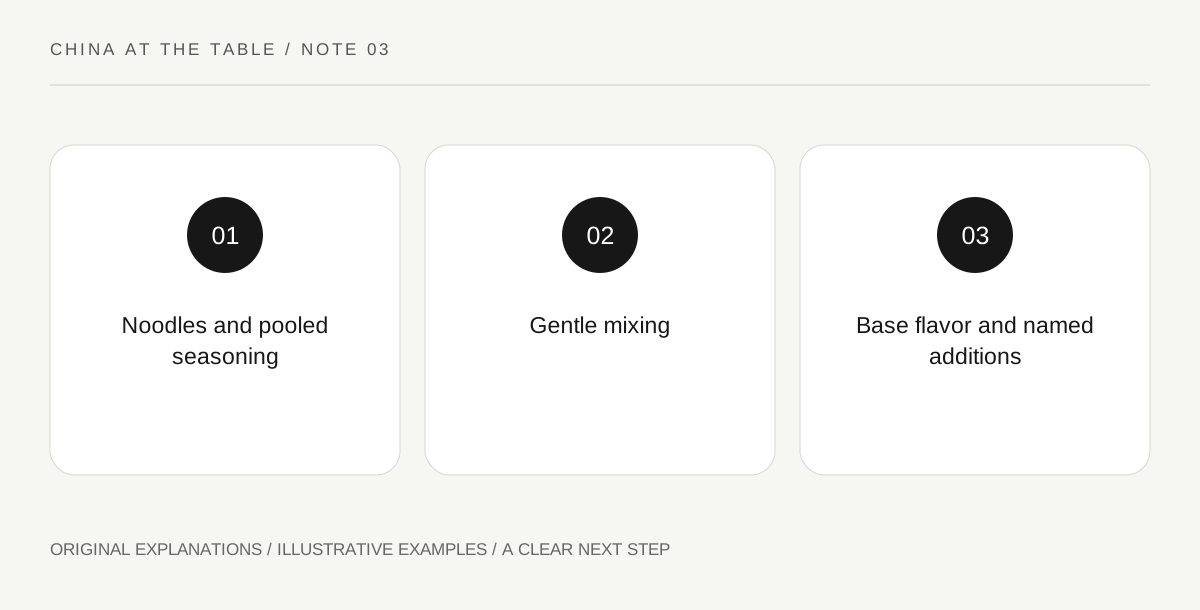
Original explanatory diagram. Read the full method and limitations below.
Identify a tossed noodle dish
The word ban in this context points toward mixing or tossing, which is a useful distinction from expecting a large bowl of soup. Shanghai’s official introduction describes noodles with aromatic scallion oil and soy sauce. Read the menu for whether a separate soup or topping is included rather than assuming a complete set from a photograph. When the bowl arrives, look for seasoning beneath or around the noodles before deciding it has no flavor. The first task may be distributing what is already there, not reaching immediately for another bottle of sauce.
Separate aroma, color and declared ingredients
Scallion oil and soy sauce contribute different things to the bowl. The official description mentions light and dark soy sauces in Shanghai versions and explains their roles in flavor and color. A dark appearance therefore should not be interpreted as a direct measure of spice heat or quality. Fried scallion pieces may be visible, while the oil carries aroma through the noodles. Look at the restaurant’s ingredient description when dietary distinctions matter. A bowl that appears to contain only noodles and scallions can still include ingredients not obvious in the finished surface.
Mix with enough care to coat the strands
Use the utensils provided to lift and turn small portions so seasoning reaches noodles that were initially uncoated. Work within the bowl rather than lifting a tangled mass over the table. After mixing, notice whether the same spoonful contains both noodle and seasoning. This gives you a fairer first impression than tasting one uncoated strand and adding extra sauce. Mixing is also an opportunity to notice the noodle’s thickness and texture. Describe the actual bowl rather than treating one remembered standard as a rule that every shop’s version must follow.
Treat additions as named variations
Shanghai’s official account notes that dried shrimp can be added and that shops may sell other toppings. Ask about those additions explicitly rather than classifying the dish as vegetarian from its title. A fried egg or pork accompaniment also changes what you are comparing. If you want to learn the base flavor, order the simpler declared version that meets your needs, then consider a topping on another occasion. If a companion chooses a richer version, compare the same elements—noodles, oil, sauce and addition—without declaring a preference proof of authenticity. The structure gives the comparison useful language.
Illustrative menu decision
A visitor sees plain scallion oil noodles and a dried-shrimp version on the menu. After confirming ingredients, the visitor selects one, mixes the bowl thoroughly and tastes before adding anything else. The note records noodle texture, scallion aroma and the declared topping separately. It does not infer that every visually plain bowl is meat-free.
Practical checks
Optional checkboxes save only in this browser.
Questions that come up
Are scallion oil noodles necessarily vegetarian?
No. The official Shanghai account describes versions with dried shrimp, and other additions depend on the kitchen. Ask about the actual preparation and sauce rather than relying on the simple dish name.
Does the dark color mean the noodles are spicy?
Not by itself. Soy-based seasoning can contribute a deep color without describing chili heat. Read the ingredients and taste the mixed dish instead of using darkness as a spice scale.
References and scope
These sources support the factual background. Examples and exercises are original illustrative teaching material. References do not imply endorsement.
- Shanghai: scallion oil noodles — Scallion-oil, soy-sauce and noodle relationship; optional dried shrimp.