Xiaolongbao: Understand the Soup Inside the Wrapper
Xiaolongbao are easier to order and eat when you understand the relationship between thin wrapper, filling and enclosed broth. The familiar English name soup dumpling can obscure those parts. Look at the specific filling on the menu and give the hot interior time and support before taking a bite.
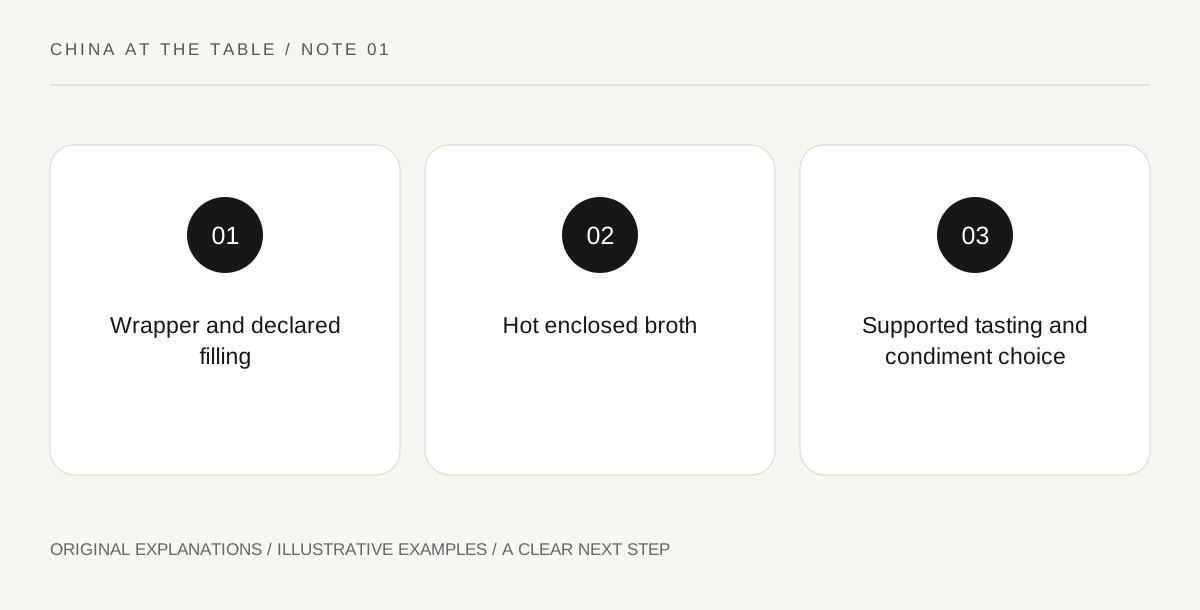
Original explanatory diagram. Read the full method and limitations below.
Read the name together with the filling
Shanghai’s official material associates Nanxiang with xiaolongbao and documents a living preparation tradition. That regional connection is useful context, but the name alone does not tell you the complete filling in the basket before you. Pork and crab-related versions can appear separately. Copy the Chinese dish name or point to its exact menu line when ordering rather than asking for any dumpling. If the English translation is vague, ask which meat or seafood the filling contains. A photograph of pale pleated wrappers cannot reliably distinguish a pork-only version from a mixed filling.
Understand why broth can be enclosed
A documented Shanghai description includes chilled pork aspic in a soup-dumpling filling. The useful idea for a diner is that a solid component can become liquid during cooking, so the wrapper holds both filling and hot broth. That helps explain why careless lifting or puncturing can empty the dumpling onto the plate. It does not mean every kitchen uses precisely the same formulation. Do not infer that visible soup is water or that a seafood-named version contains no pork-derived ingredient. Ask about the actual filling and broth components when that distinction matters to your choice.
Use support to study the first dumpling
Place the dumpling on a suitable spoon or other support provided by the restaurant and approach the hot interior cautiously. An opening releases liquid that can be much hotter than the surface suggests. Follow staff guidance if unfamiliar with the presentation, and let the food cool enough to eat comfortably. The first dumpling is also a chance to notice wrapper thickness, filling texture and the relationship between broth and dough. This is an observation sequence, not a competition to finish the entire piece in one bite or a claim that one ritual is compulsory for every diner.
Keep the condiment separate from the comparison
If vinegar, ginger or another condiment is offered, taste a modest amount rather than covering the whole basket automatically. Try to identify the dumpling’s own broth and filling before deciding what balance you prefer. There is no need to turn that preference into a judgment that another diner is eating incorrectly. If comparing two versions, use their menu names and note a specific difference, such as the declared filling or wrapper impression. A useful comparison describes the food served on that occasion; it does not establish that all restaurants in a city prepare the dish identically.
Illustrative two-basket order
Two adults order one pork-labeled basket and one explicitly crab-and-pork basket, after checking the fillings with staff. They record which basket is which, support the first dumpling on a spoon and allow the broth to cool. A small amount of condiment is added later. Their notes compare the declared fillings rather than guessing from wrapper color.
Practical checks
Optional checkboxes save only in this browser.
Questions that come up
Does a crab label mean the dumpling contains only crab?
No. Some documented Shanghai versions combine crab with pork and aspic. Ask the kitchen what the particular menu item contains rather than treating its headline ingredient as the complete list.
Must a soup dumpling be eaten in one bite?
No. The hot liquid and fragile wrapper call for a comfortable, supported approach. Let it cool and follow helpful restaurant guidance without treating an eating demonstration as a compulsory performance.
References and scope
These sources support the factual background. Examples and exercises are original illustrative teaching material. References do not imply endorsement.
- Shanghai: Nanxiang xiaolongbao craft event — Nanxiang soup-dumpling identity and local craft context.
- Shanghai: visual taste and local foods — Xiaolongbao aspic and crab variations and paigu niangao identity; no timings treated as tested recipes.