Shengjian: Recognize the Pan-Fried Bun Beneath the Name
Shengjian combine a cooked dough shell, a crisp pan-contact surface and a savory filling. Some versions are especially juicy; others emphasize a different dough structure. Understanding that variation helps you read a Shanghai menu without assuming every bun under the same English label will behave exactly alike.
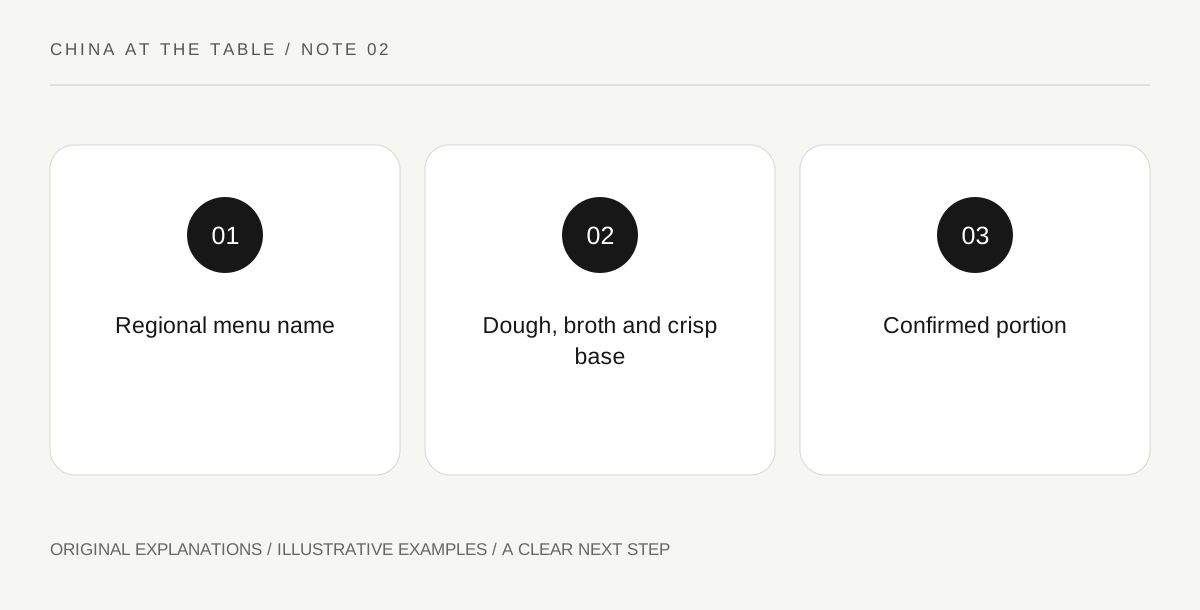
Original explanatory diagram. Read the full method and limitations below.
Keep the Shanghai name visible
The local name may appear as shengjian or shengjian mantou. Shanghai’s official account explains that mantou retains a filled-bun usage in this regional context, so translating it automatically as a plain steamed bread can mislead. Use the menu name with the establishment’s filling description. Pan-fried pork bun is a helpful starting translation, but a shop may offer other fillings or house variations. Ask what is in the portion rather than assuming the word shengjian fixes every ingredient and style. Keeping the Chinese name visible also helps avoid confusing it with a different fried dumpling.
Look at dough and liquid as separate choices
The official Shanghai introduction distinguishes styles with different degrees of dough leavening and different use of added aspic. For the diner, the practical lesson is that a plump doughy appearance and a very juicy filling are separate characteristics to notice. A bun’s size is not a reliable measure of how much broth it holds. If the menu describes a particular house style, ask staff what that means before comparing it with a version you remember elsewhere. Variation does not automatically indicate that one shop has misunderstood the dish; it can be part of the local range.
Give the crisp base and hot filling different attention
The pan-contact surface contributes a texture distinct from the upper dough. Support the bun and approach the hot interior cautiously instead of biting through the whole thing while standing over clothing or a shared table. Let escaped liquid cool and use the utensils supplied. Once comfortable, compare the base with the softer dough and filling. This way of looking explains why shengjian are more than a steamed bun browned for decoration. It also avoids treating crispness alone as the sole measure of quality, since the dough and filling have jobs of their own.
Clarify the portion rather than translating a unit blindly
Shanghai’s official account describes a local custom in which a liang of shengjian refers to a familiar number of buns derived from a traditional flour measure. That is a cultural explanation, not a universal portion guarantee for every shop. Point to the current menu and ask how many pieces the order contains. For a shared breakfast, establish the count before everyone orders a full portion. Include any soup or side dish as its own item and confirm whether it is bundled or separate. A clear order prevents both surprise quantities and a mistaken assumption that a traditional unit must equal the finished bun weight.
Illustrative breakfast comparison
A pair of diners asks how many buns come in the displayed portion and which filling it contains. They choose one portion first, then compare upper dough, crisp base and the amount of enclosed liquid. If still hungry, they add another item deliberately. Their notes describe that shop’s version without declaring all shengjian equally soupy or equally bread-like.
Practical checks
Optional checkboxes save only in this browser.
Questions that come up
Why does a filled bun sometimes contain mantou in its name?
Regional usage differs. Shanghai’s account explains an older filled-bun meaning retained in shengjian mantou. Read the local dish description rather than applying one dictionary translation to every regional food name.
Does one liang always mean the same finished portion?
Do not assume that. The local custom is useful cultural context, but the current shop menu determines the portion being sold. Ask for the number of pieces and what is included.
References and scope
These sources support the factual background. Examples and exercises are original illustrative teaching material. References do not imply endorsement.
- Shanghai: pan-fried pork buns — Shengjian terminology, dough styles, aspic and local ordering custom.