A First Chongqing Hotpot Order: Broth, Plates and Table Service
A hotpot meal is an ongoing table process rather than a single finished dish arriving from the kitchen. Broth, individual ingredient plates, condiments and preparation guidance all affect the experience. Clarify those parts at the beginning so the table can enjoy the meal without confusing service format with spice bravado.
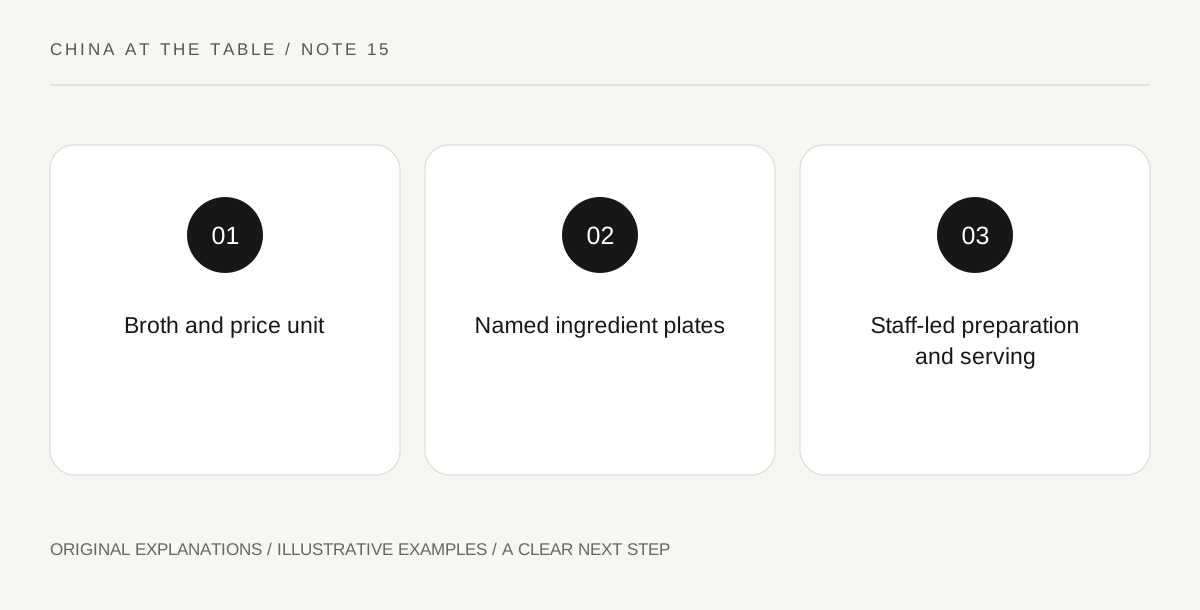
Original explanatory diagram. Read the full method and limitations below.
Begin by identifying the broth choice
Chongqing’s official food introduction describes a communal simmering-pot format and contrasts a spicy preparation with a plainer option. Use that distinction to ask what the restaurant offers rather than assuming the entire city has one compulsory broth. Read the complete description, including any animal ingredients, and establish whether the broth is priced separately from the food plates. A divided pot may provide different flavors, but its arrangement should not be interpreted as an allergen-separation guarantee. If a dietary need requires strict separation, discuss that directly with the operator rather than relying on the visible partition.
Order by ingredient categories and actual portions
Look at the plate sizes and ask which items are raw, prepared or ready to eat. Choose a manageable first selection that fits the table’s preferences instead of ordering every famous ingredient simultaneously. The broth and plate charges can have different units, so distinguish per pot, per plate and any per-person fee shown on the menu. Condiment or rice arrangements may also be separate. This is not a fixed shopping list: the important skill is reading how the meal is assembled and priced. A small initial order lets you understand both the service and the group’s appetite.
Let staff explain cooking and utensil roles
Ask how the establishment wants each unfamiliar ingredient handled and which utensils are for raw ingredients, cooking and eating. Do not infer safe cooking completion from a short video, a change of color or someone else’s remembered seconds. Different foods and cuts require appropriate handling, and a cultural guide cannot certify them from a menu name. Follow the restaurant’s preparation instructions and ask for assistance whenever the table is uncertain. Keep ready-to-eat food separate from raw handling according to that guidance. Clear roles make the shared process easier to manage without turning a first meal into guesswork.
Treat the condiment as a separate composition
If the restaurant offers a condiment station or prepared dip, ask what it contains and how it is charged. Taste a modest amount that suits your needs before building a bowl with many unfamiliar ingredients. A dip can change the impression of a cooked item, so compare it with the broth context rather than treating the condiment as an afterthought. Keep track of what the table has already received before reordering. A useful hotpot memory records broth, ingredient selection and the service sequence; it does not need to claim that the hottest possible combination is the most culturally legitimate meal.
Illustrative first table order
Three adults choose a broth after discussing ingredients with staff, then order a modest selection of clearly identified plates. Staff explain preparation and utensil roles. The diners add more food only after understanding the actual portions and what has already arrived. The scenario sets an ordering sequence without prescribing cooking times or implying that a divided pot meets a medical dietary requirement.
Practical checks
Optional checkboxes save only in this browser.
Questions that come up
Is the spiciest broth the only proper Chongqing choice?
No. The cited local introduction describes a plainer alternative as well. Choose the available version you can appreciate and ask the kitchen what its broth contains.
Does a divided pot make two allergen-safe cooking areas?
Do not assume so. A physical partition does not establish separate handling, utensils or ingredients. Explain any strict requirement directly to the restaurant and rely on its informed answer.
References and scope
These sources support the factual background. Examples and exercises are original illustrative teaching material. References do not imply endorsement.
- Chongqing: hotpot introduction — Communal broth format and availability of contrasting broth styles; no current venue recommendation.