Mapo Tofu: Separate Numbing Spice, Chili Heat and the Tofu
Mapo tofu is a useful introduction to Sichuan flavor because softness, seasoning and different sensations coexist in one dish. It is also a good example of why a vegetable ingredient in a dish name does not make the finished preparation vegetarian. Read the whole dish before ordering.
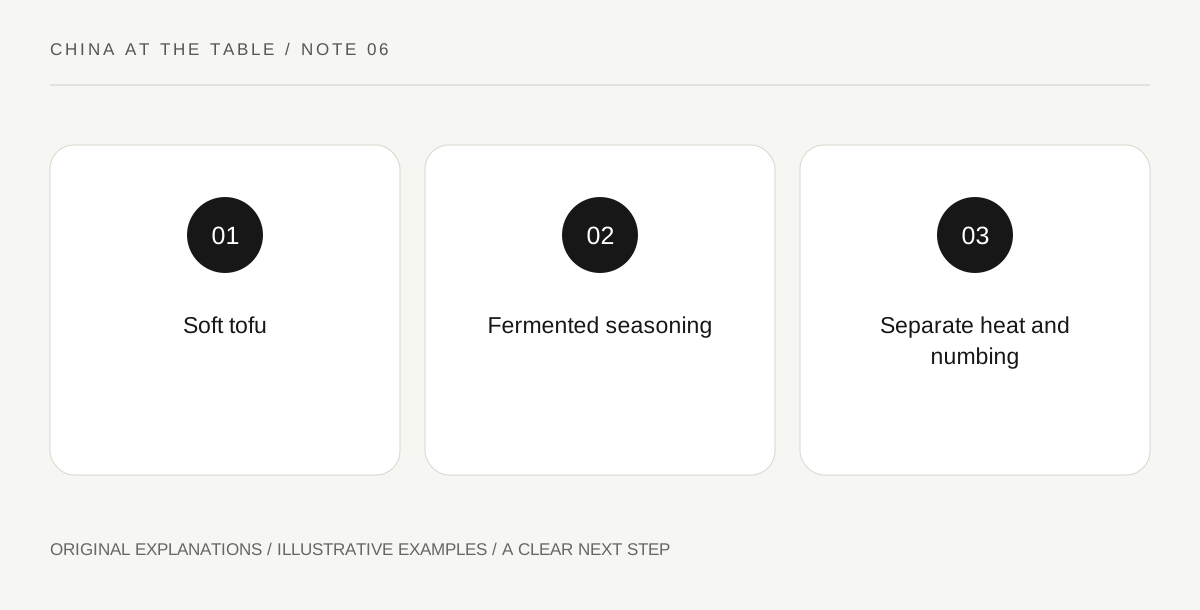
Original explanatory diagram. Read the full method and limitations below.
Do not reduce the dish to a heat contest
GoChengdu’s regional introduction distinguishes chili heat from the numbing sensation associated with Sichuan pepper. That provides a more precise vocabulary than simply saying the food is hot. When discussing preferences with staff, ask about chili and pepper separately where useful. A reduced-chili request does not necessarily remove pepper sensation, and the reverse is also true. Keep your description practical rather than trying to perform spice tolerance for companions. The point of identifying sensations is choosing a version you can appreciate, not finding the most intense bowl available.
Recognize tofu as the central texture
In a documented restaurant-provided preparation, tofu is handled as a component whose shape and softness matter within the sauce. For a diner, observe how a spoonful combines tofu with the surrounding seasoning rather than judging only the quantity of oil visible at the edge. A plain rice accompaniment can help you compare those elements, but the restaurant’s portions determine what to order. Tofu texture can differ between kitchens and products. Do not interpret a difference in firmness as enough evidence that one version is incorrect, nor assume that every tofu dish should behave like a crisp fried cube.
Ask about the ingredients around the tofu
The cited preparation contains meat and fermented seasonings including douban and black beans, alongside Sichuan pepper and chili. Its ingredient list and method do not use identical wording for the meat, which is one reason not to prescribe a single compulsory meat from that source. Ask the restaurant what its actual version uses. Tofu itself does not erase the presence of meat, stock or other animal ingredients. If a kitchen offers a vegetarian adaptation, clarify what changes beyond removing visible mince. A missing garnish is not proof that the sauce was prepared without the ingredients relevant to your needs.
Compare flavor structure rather than authenticity labels
A useful note separates tofu texture, chili intensity, pepper sensation and the fermented seasoning the menu or kitchen identifies. That gives you vocabulary for another order without copying a restaurant’s exact recipe or pretending to have measured it. If sharing several dishes, avoid choosing every plate with the same dominant sensation merely because each is famous. Contrast can make it easier to understand the mapo tofu itself. A milder companion dish is a menu choice, not a treatment for discomfort. Follow your own dietary limits and let preference remain preference rather than turning it into a universal verdict on Sichuan cuisine.
Illustrative table conversation
A diner asks whether the mapo tofu contains meat and whether the kitchen can adjust chili intensity. Staff explain the available version, including its fermented seasoning. The diner orders rice separately and notes tofu softness, chili heat and pepper sensation as three observations. The example does not assume every kitchen can make the same adjustment or offer a vegetarian preparation.
Practical checks
Optional checkboxes save only in this browser.
Questions that come up
Is mapo tofu a vegetarian dish because it contains tofu?
Not necessarily. The documented versions include meat, and other sauce ingredients also matter. Ask about the actual preparation or a specifically explained vegetarian adaptation.
Does less chili mean no numbing sensation?
No. Chili and Sichuan pepper contribute different sensations. Ask about both when that distinction affects your choice, and confirm what adjustment the kitchen offers rather than relying on a vague mild label.
References and scope
These sources support the factual background. Examples and exercises are original illustrative teaching material. References do not imply endorsement.
- GoChengdu: local dishes — Twice-cooked pork and yuxiang seasoning profiles; institutional regional food introduction.
- GoChengdu: Mapo tofu, restaurant-provided recipe — Tofu, meat, Pixian douban and Sichuan pepper in a documented version; ingredient and method meat wording differ, so no single-meat claim.