Huiguorou: What Twice-Cooked Pork Tells You About Technique
The name huiguorou points to a return to the cooking vessel rather than a promise of two identical frying steps. Understanding that sequence helps you recognize the dish and discuss its accompaniments. The finished plate is a useful study in slices, seasoning and contrast.
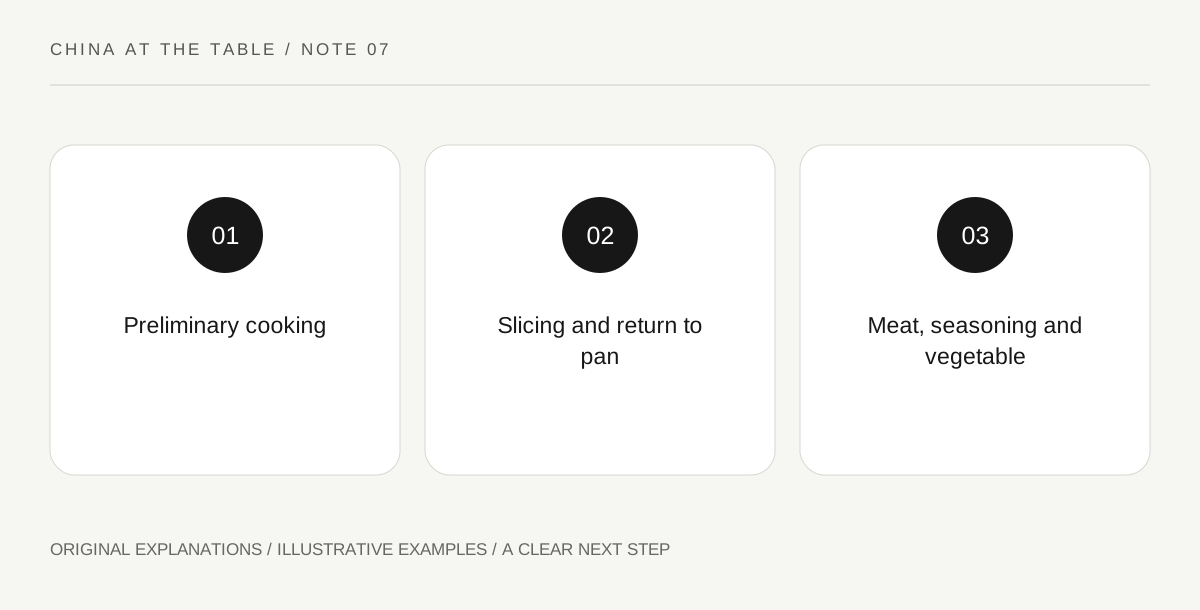
Original explanatory diagram. Read the full method and limitations below.
Translate the name as a process clue
GoChengdu describes a preparation in which pork is first simmered, then sliced and stir-fried with seasonings and vegetables. That is the core idea behind the English label twice-cooked pork. It is not a statement that the dish is yesterday’s unsold food reheated or that every version undergoes two rounds of deep-frying. Use the name to ask how the kitchen prepares its version. A process term tells you what kind of transformation matters; it does not substitute for ingredient information, portion details or a full cooking method that you can safely reproduce from a brief menu description.
Look at the slice rather than only the sauce
At the table, notice the relationship between the cut surfaces, the visible layers of the meat and the way seasoning adheres. Compare a slice alone with a mouthful that includes its vegetable accompaniment. Keep those observations specific to what was served. A picture may reveal a slice shape but cannot establish the exact cut, preliminary cooking or seasoning quantities. Ask the kitchen when you need that information rather than reverse-engineering a confident recipe from appearance. The two-stage process is useful because it draws attention to why the meat’s preparation differs from a stir-fry made from raw shreds.
Read fermented seasonings as distinct ingredients
The regional account mentions doubanjiang and douchi in its description. They should not be collapsed into a single generic black sauce merely because both are fermented seasonings. If a menu translation does not explain them, ask what the restaurant uses and whether it can identify the product or ingredient base relevant to your question. Color alone does not settle saltiness, spice or dietary suitability. A visible bean-shaped piece is also an incomplete ingredient list. The practical goal is being able to describe the seasoning accurately enough to order or compare the dish, not to claim that every kitchen follows one formula.
Treat the vegetables as part of the composition
GoChengdu’s example includes garlic sprouts or green peppers as possible partners. That variation suggests asking what accompanies the pork rather than expecting the same green ingredient at every restaurant. Observe how the vegetable changes texture and flavor within a mouthful. If you dislike an ingredient, ask before ordering whether an alternative is available; removing pieces after service does not remake the dish. For a shared meal, choose other dishes that provide a different texture or focus. A plate named for pork can still be understood through the relationship between meat, aromatics and seasoning, not only through the weight of meat it contains.
Illustrative process comparison
A diner sees huiguorou beside a separate shredded-pork stir-fry. Staff explain that the first uses a preliminary cooking stage before slicing and returning the pork to the pan. The diner selects it to study that contrast, then notes the slice, fermented seasoning and vegetable partner. No times, temperatures or home-cooking safety claims are inferred from the restaurant description.
Practical checks
Optional checkboxes save only in this browser.
Questions that come up
Does twice-cooked mean leftover pork?
The name refers to a cooking sequence, not to an assertion about leftovers. The cited regional description uses preliminary simmering followed by slicing and stir-frying.
Will every huiguorou contain exactly the same vegetables?
No. The regional description itself gives alternatives. Read the menu and ask which vegetables accompany that kitchen’s version, especially if an ingredient affects your choice.
References and scope
These sources support the factual background. Examples and exercises are original illustrative teaching material. References do not imply endorsement.
- GoChengdu: local dishes — Twice-cooked pork and yuxiang seasoning profiles; institutional regional food introduction.