A First Dim Sum Order: Recognize Dumplings, Buns and Rice Rolls
Dim sum is a shared small-dish format, not the name of one dumpling. Reading the menu through wrapper, filling and cooking form makes a first order more manageable. Begin with a few contrasting dishes and add deliberately, keeping the basket count separate from the number of individual pieces.
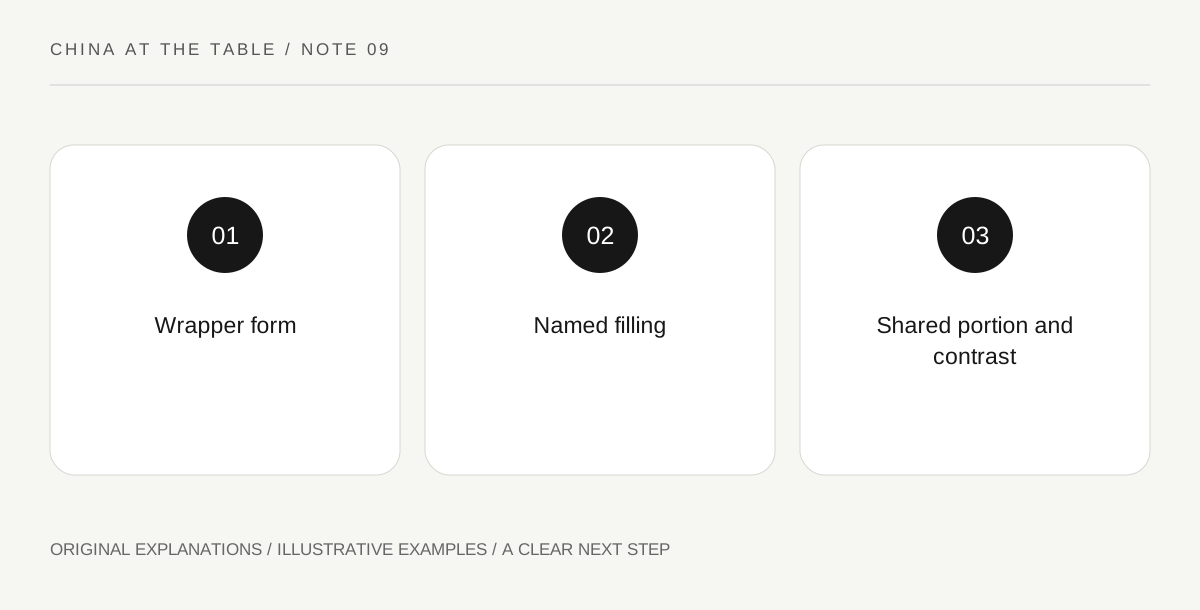
Original explanatory diagram. Read the full method and limitations below.
Sort by the structure around the filling
The Hong Kong Tourism Board introduces siu mai, har gow, char siu bao and cheung fun as different familiar choices. Use their forms to organize the menu: an open-topped dumpling, an enclosed translucent wrapper, a fluffy bun and a soft rice-sheet roll are not interchangeable objects. Those visual categories help you remember a dish after the menu closes. A shape still does not establish every ingredient. A photograph is an identification aid that should be read beside the exact name and filling description, especially when a restaurant offers contemporary variations.
Make a contrasting first selection
Instead of ordering several nearly identical baskets because their names are familiar, choose different forms that fit the group’s preferences. A dumpling, a bun and a roll can offer a clear first comparison of wrapper and filling. Check how many pieces each order contains and whether a dish is sold per basket, plate or person. An illustration with three pieces does not fix the portion at another establishment. A small first order leaves room to discover what the group enjoys. The purpose is understanding the range, not proving that you can finish a list of famous items.
Read the filling independently of the wrapper
The tourism board’s examples include pork and shrimp in siu mai, shrimp in har gow and barbecue pork in char siu bao, while rice rolls can carry several fillings. That provides starting vocabulary for recognizing names, not a certified ingredient declaration for the next restaurant. If a diner needs to avoid an ingredient, ask about the specific item rather than selecting it because its wrapper looks plain. Condiments and garnishes are also part of the served dish. A vegetarian-looking color palette should never stand in for an explanation of filling and preparation.
Share in a way that preserves the comparison
As dishes arrive, identify each one with its menu name and let people know the declared filling before serving. Use the restaurant’s sharing utensils where provided. Notice wrapper texture, filling texture and the way the two relate rather than assigning a single best score immediately. If ordering more, choose whether to repeat a favorite or add a genuinely new form. Keep a simple record of quantities so a delayed dish is not accidentally ordered twice. Dim sum can be a relaxed meal while still benefiting from that small amount of organization, especially when several similar bamboo baskets arrive together.
Illustrative three-form start
Four adults select a clearly identified dumpling, a barbecue-pork bun and a rice roll after checking portion counts and ingredients. They compare wrapper forms before adding another order. One basket is repeated because the group likes it, while the next new dish adds a different texture. These are illustrative choices, not a fixed number of dishes required for four people.
Practical checks
Optional checkboxes save only in this browser.
Questions that come up
Is dim sum simply another word for dumplings?
No. The format includes many small dishes, including buns, rice rolls and sweets as well as dumplings. Reading the structural differences makes the menu easier to navigate.
Can I identify all ingredients from the wrapper?
No. The wrapper helps recognize a form, but fillings, sauces and contemporary variations differ. Use the precise menu item and kitchen information for ingredient decisions.
References and scope
These sources support the factual background. Examples and exercises are original illustrative teaching material. References do not imply endorsement.
- Hong Kong Tourism Board: beginner dim sum — Har gow, siu mai, cheung fun and lotus-leaf sticky rice identification; examples are not ingredient guarantees.