Siu Mei: Read a Cantonese Roast-Meat Counter Without Guessing
Siu mei is useful to recognize as a roast-meat category rather than one fixed dish. At a Cantonese counter, the ordering choice involves the particular meat, preparation, portion and accompanying rice or other staple. Look beyond a glossy surface and ask what the displayed name actually identifies.
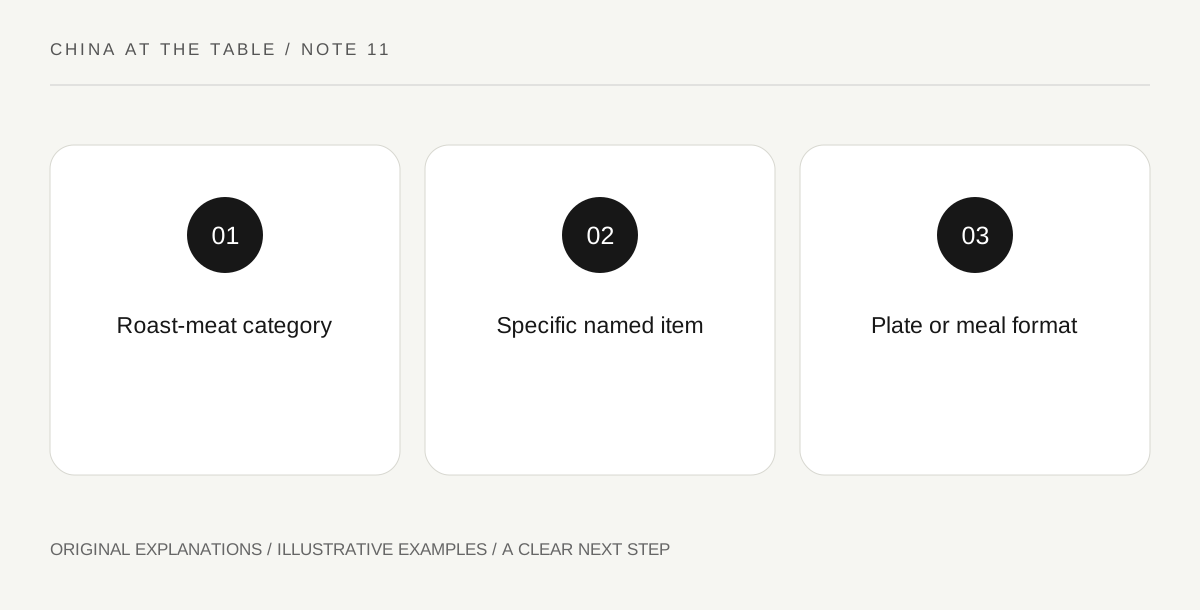
Original explanatory diagram. Read the full method and limitations below.
Start with category and individual item
The Hong Kong Tourism Board identifies siu mei as Hong Kong-style roast meat within everyday dining. Use that category to locate the relevant part of the menu, then choose the individual item. A broad request for barbecue may not distinguish the cuts or preparations you want. Read the Chinese name with its English description and ask staff to point to the corresponding item if the counter display is confusing. This establishes a clear shared reference before questions about portion or accompaniments. The display’s visual appeal is useful for choosing, but it is not a substitute for naming the product.
Ask whether you are ordering a plate or a rice meal
The same meat can be sold in different meal formats. Determine whether the current line includes rice, a vegetable accompaniment, sauce or a combination of meats. A price near a photograph may refer to a particular set rather than any item behind the glass. For a takeaway order, confirm which sauce is packed and whether it is already applied. If sharing, distinguish a mixed meat plate from several complete rice meals. This small clarification prevents the table from acquiring multiple staples when the intention was to compare just the meats.
Compare surface and interior as separate observations
A finished roast has an outside and an interior that can contribute different textures and flavors. Look at the cut portion you receive rather than drawing a conclusion from a whole item hanging in the display. Note whether your preference concerns the surface, the meat or a sauce added at service. A glossy appearance does not identify every glaze ingredient, and a dark edge does not by itself prove a cooking method. If you want to learn a house style, ask how the named item is prepared and let the operator supply the technical description.
Use the order as a vocabulary reference
Save the exact menu name of the item you liked and a short note about its served format. That is more portable than remembering simply roast pork or red meat, phrases that can be interpreted broadly elsewhere. When trying another counter, use the name as a starting point while allowing for the kitchen’s version. Ask ingredient questions directly if a glaze or sauce matters to your diet. A menu label is a cultural and commercial identifier, not a laboratory declaration. Describing what you actually ordered also avoids claiming that one quick meal reveals the quality of every roast-meat shop in a neighborhood.
Illustrative counter order
Two diners want to compare roast meats but only need one rice accompaniment. They ask which menu line buys a mixed plate and which buys an individual rice meal, then confirm the included sauce. Their note keeps the precise meat names and formats. The example teaches order structure without naming a current shop or claiming to have reviewed its food.
Practical checks
Optional checkboxes save only in this browser.
Questions that come up
Does siu mei name one particular meat?
It names a roast-meat category in the cited Hong Kong guide. The individual menu item still needs to be identified before you know the specific meat and preparation being offered.
Can the display color tell me the glaze ingredients?
No. Color and shine are visual observations, not a complete formulation. Ask about the particular item and sauce when ingredients affect your decision.
References and scope
These sources support the factual background. Examples and exercises are original illustrative teaching material. References do not imply endorsement.
- Hong Kong Tourism Board: local roast meat — Siu mei as a local roast-meat category and its place in everyday dining.