Lo Mai Gai: Understand the Lotus Leaf, Rice and Filling
A leaf-wrapped dim sum parcel asks you to look beneath the wrapper. Lo mai gai combines sticky rice with a savory filling, while the leaf forms part of its presentation and preparation. Understanding those layers prevents confusion with a dumpling, a plain rice side or every other Chinese leaf-wrapped food.
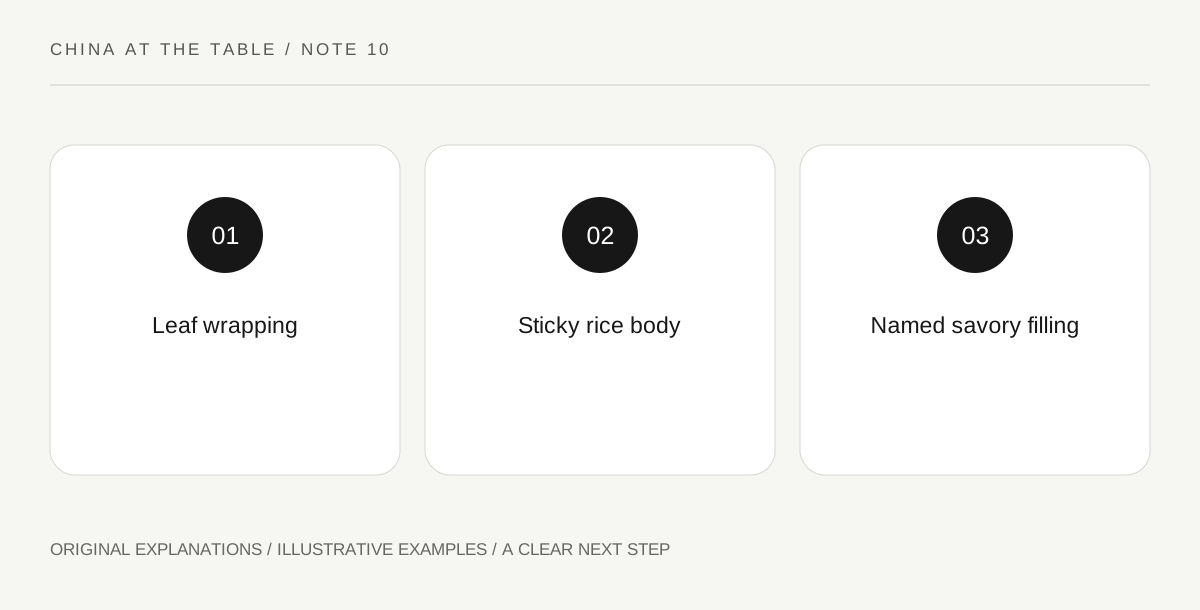
Original explanatory diagram. Read the full method and limitations below.
Identify the parcel by its menu name
The Hong Kong Tourism Board describes lo mai gai as sticky rice wrapped in lotus leaf, with a familiar filling example including chicken, mushroom and Chinese sausage. Keep that specific identity alongside the visual form. A green or brown leaf around food is not enough to name the dish, because other regional foods also use leaves. If the menu translation says only sticky rice, ask whether it refers to a filled parcel or a plain accompaniment. That distinction changes both what arrives and how it fits into the rest of a shared dim sum order.
Open to see the structure rather than pulling blindly
Use the plate and utensils provided to open the parcel carefully once it is comfortable to handle. The wrapper exposes a rice mass with filling within or among it, so a spoonful drawn only from an outer corner may not represent the whole dish. Look for the rice-to-filling relationship before dividing it among companions. Treat the leaf as the wrapping unless the restaurant explicitly explains otherwise; it should not be confused with a vegetable garnish to chew. Avoid spilling liquid or placing a hot opened parcel directly on another diner’s plate while trying to share it.
Compare sticky rice with the other starches on the table
A dim sum meal might already include a bun or rice-sheet roll. The sticky rice parcel adds another texture and a more substantial form, so consider it part of the meal’s starch selection rather than a decorative extra. Notice how the rice holds together and how the filling interrupts that texture. This is a practical comparison, not a nutritional ranking. If the table has ordered several filling dishes, a parcel may be better shared before adding more of the same structure. Portion sizes vary, so inspect the actual menu and the group’s appetite rather than prescribing one parcel for a fixed number of people.
Keep the wrapper’s cultural association specific
Lotus-leaf sticky rice belongs to a documented Cantonese dim sum context in the cited guide. Do not automatically transfer Dragon Boat festival meanings or a zongzi origin story to it because both foods can be leaf-wrapped and rice-based. Compare the named foods by wrapper, grain arrangement, filling and occasion. Ask for an ingredient explanation when required, since a chicken-named item can contain additional meats in a documented version. That is a useful lesson in dish naming: the ingredient highlighted in the title may be the center of attention without being the entire filling list.
Illustrative table comparison
A group has ordered a steamed bun and rice rolls when a lotus-leaf parcel arrives. They identify it as lo mai gai, open it on its plate and divide portions that include both rice and filling. Their notes distinguish the wrapper, sticky rice texture and declared ingredients. They do not relabel it zongzi simply because it is wrapped in a leaf.
Practical checks
Optional checkboxes save only in this browser.
Questions that come up
Does the chicken in the name mean there are no other meats?
No. The tourism board’s example also includes Chinese sausage. Ask about the full filling in the restaurant’s version rather than reading the featured ingredient as an exhaustive list.
Is every leaf-wrapped rice parcel a zongzi?
No. Distinct regional foods can share that broad form. Use the actual menu name, wrapping, filling and cultural context to identify the item instead of relying on the leaf alone.
References and scope
These sources support the factual background. Examples and exercises are original illustrative teaching material. References do not imply endorsement.
- Hong Kong Tourism Board: beginner dim sum — Har gow, siu mai, cheung fun and lotus-leaf sticky rice identification; examples are not ingredient guarantees.
- UNESCO: Dragon Boat festival — Regional festival practices and rice-dumpling feasts; not instructions for alcoholic or mineral preparations.