Zongzi: Sweet and Savory Parcels Within the Dragon Boat Festival
A zongzi parcel can contain very different fillings, even when two versions look similar from the outside. Its association with the Dragon Boat Festival is important, but the festival itself includes more than one food or story. Read the exact parcel before applying a broad cultural label.
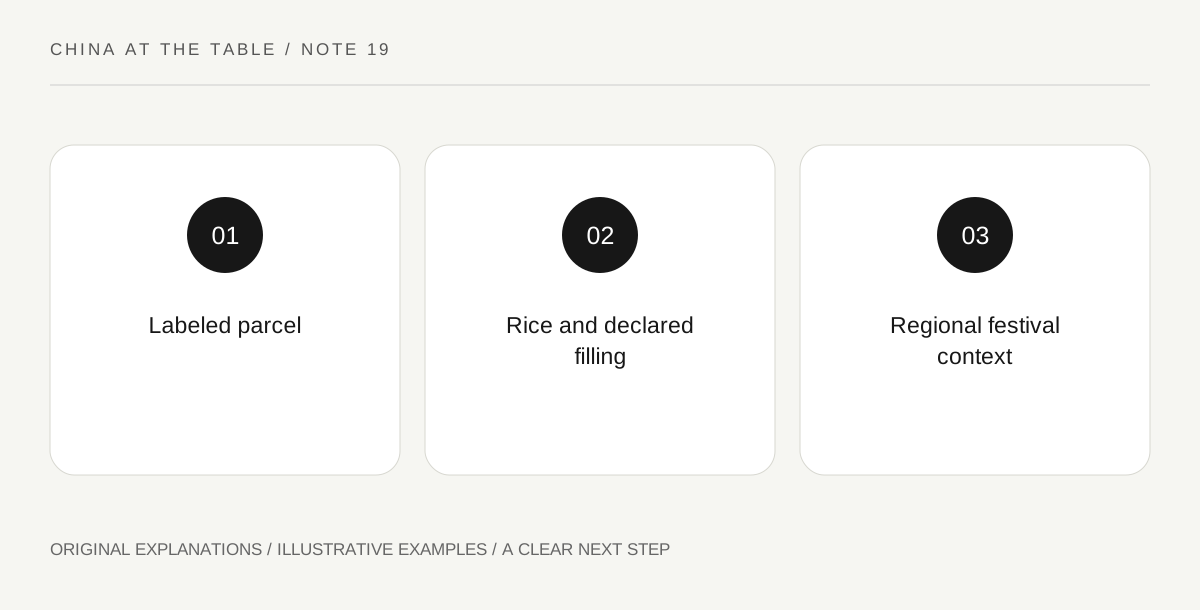
Original explanatory diagram. Read the full method and limitations below.
Begin with the filled-rice format
Shanghai’s recent guide documents both savory and sweet zongzi, with examples including pork, salted egg yolk, red bean and jujube. That range immediately shows why a leaf-wrapped parcel is an incomplete ingredient description. Check the named variety on a menu or package and ask what the wrapper contains. Keep the filling label with the parcel if several are bought together. A small mark on a tied package may identify a flavor according to the shop’s own system, so ask for its key rather than guessing from string color or the shape of the finished bundle.
Open the wrapper without confusing it with the food
Use a suitable plate and follow the product or restaurant’s serving instructions, including any required preparation. Once ready, unwrap carefully and distinguish wrapping from the edible rice and filling. The intact parcel can hide differences in size and distribution, so divide a shared example in a way that lets each person understand both outer rice and center. This is a description of table organization, not instructions for cooking an unspecified packaged product. A fresh-looking leaf and a warm surface do not tell you everything about storage, preparation or readiness to eat.
Compare sweet and savory as choices within a tradition
A pork-and-yolk version and a red-bean version can illustrate different expectations without requiring a contest over which is the true zongzi. Observe the rice, filling and seasoning relationship in the particular examples. A shop can also offer contemporary combinations, so distinguish a documented current creation from a claim of ancient origin. If giving a box as a gift, include the flavor identification and the seller’s preparation or storage information. A recipient should not have to infer the filling from a festive design on the box. Cultural generosity is helped by clear, practical labeling.
Keep the festival larger than a single naming story
UNESCO describes Dragon Boat festival practices as regionally varied and including rice-dumpling feasts alongside ceremonies, sports and performance. That gives zongzi a place within a broader social occasion. It does not justify describing every community as commemorating the same figure in exactly the same way. If a source presents a legend, call it a legend and identify its context. Avoid turning a food introduction into advice to consume traditional mineral or alcoholic preparations mentioned in historical festival accounts. The useful cultural lesson is how a shared occasion can contain recognizable foods and substantial local variation at the same time.
Illustrative gift box
A visitor buys one savory and one sweet variety after the seller identifies the fillings. Each parcel stays with its label, and the recipient receives the product’s actual preparation and storage instructions. A short note explains the Dragon Boat Festival association without claiming the two flavors represent every region. The example uses a gift to preserve both cultural meaning and ingredient clarity.
Practical checks
Optional checkboxes save only in this browser.
Questions that come up
Can I identify a filling by the parcel’s shape?
Do not rely on that. Shapes and shop markings can vary. Use the explicit flavor label or ask the seller, especially when similar parcels contain different meat, egg or sweet fillings.
Does everyone explain the festival with the same story?
No. UNESCO’s account emphasizes regional variation in commemorations and practices. Keep a specific story connected to the community or source presenting it rather than calling it universal.
References and scope
These sources support the factual background. Examples and exercises are original illustrative teaching material. References do not imply endorsement.
- UNESCO: Dragon Boat festival — Regional festival practices and rice-dumpling feasts; not instructions for alcoholic or mineral preparations.
- Shanghai: zongzi sweet and savory varieties — Documented Shanghai pork, salted-yolk, red-bean and jujube examples; contemporary variation.